Prepare for Movers: Staging Boxes and Clearing Walkways
Move day speed is won or lost before the truck ever backs into the driveway. Crews can work with almost any situation, but the difference between a smooth load and a long, exhausting day often comes down to two habits: staging boxes thoughtfully and keeping walkways clear. Both sound simple. Both are easy to overlook once the house fills with tape, totes, and decisions. After hundreds of residential and office moves, I can say these two steps save more time and prevent more dings than any other prep you can do.
What “staging” actually means inside a lived-in house
Staging is not interior design. In moving, it means grouping ready-to-go items so the crew can grab, stack, and roll without hunting. If that sounds like common sense, remember how packing really goes. You box a shelf, then set that box near the couch because the floor is clear there. Two hours later you add a kitchen box to the same spot, then a bag of donations. By morning, you have a pile that makes no sense to anyone who didn’t live your Tuesday.
Good staging follows a few rules. First, anything staged is closed, taped, and labeled on two sides. Second, each room’s boxes sit near the exit you intend movers to use, not in the center where people need to walk. Third, odd shapes and smalls gather into one “catch” zone rather than scattering across the house. These aren’t rigid rules. They give the crew a rhythm, which is what you really want.
I once watched a family in a split-level home try to “stage” by stacking three floors’ worth of boxes on the main landing. It felt efficient because everything was “together,” but it turned the stairwell into a chute. The crew couldn’t pass with furniture, and every trip required shifting the stack. A better version would have been staging each level’s boxes near its own exit point so the carry path stayed open.
The carry path decides your day
Movers think in paths. From each room to the door, from the door to the truck, from the truck to the stack. If that path requires side steps, tight pivots, or soft ground, your day slows to half speed. Clearing walkways means eliminating friction along that path. We measure friction in seconds and scratches.
Start with doors. Doors that swing fully open give you extra inches that matter when a dresser tilts or a sofa needs a turn. Check that every door along the route opens freely and can hold with a wedge or a rubber stop. If there’s a sticky hinge or a door that drifts shut, solve it ahead of time. Remove door rugs that bunch up, and if you love your thresholds, cover them with runner protection. A folded towel works in a pinch, but paper runners or neoprene are better.
Stairs come next. Stairs are where fatigue sets in and mistakes compound. Clear the landings completely. Remove wall art at shoulder height along stair runs. If you have low fixtures, tape a little “mind your head” note at the top step. Plan where hands will go. Loose banister caps and wobbly spindles cause more surprises than heavy furniture.
Then think about the outside approach. The most beautiful staging falls apart if the driveway is blocked, the gate latch sticks, or the side yard is muddy. Look at the forecast. If rain is likely, place a stiff mat at the entry and a second one at the truck side. If you can stage rollable items near the firmest surface, do it. In the Pacific Northwest, many homes rely on gravel or sod shoulders. A sheet of plywood can turn mud into a passable landing zone.
The label that saves ten minutes every hour
Labels are staging’s twin. You can stage perfectly and still slow down if the crew keeps turning boxes to find the one face with a room name. Label the long side and a short side, high-contrast marker, three-inch letters. If you’re moving in a multi-story home, include the floor and room. For example, “2F - Primary Bedroom - Bedding.” Those twelve characters can save two trips and three questions.
Pre-labels beat improvisation by a wide margin. If you are using colored tape or dots for zones, consider applying the colored tape as a vertical stripe on the box edge rather than a small sticker on the top. Stripes can be seen when boxes are stacked. Keep the legend visible at the main entrance so anyone joining midday can read the code in seconds.
How A Perfect Mover Moving and Storage Service stages for speed
Teams at A Perfect Mover Moving and Storage Service treat staging as a timed puzzle. On walkthrough, the lead identifies the primary carry path, then draws a quick mental map of staging zones. In split-level homes, they often create micro-zones near each top-of-stair landing to keep furniture carries clean. On second visits, I’ve seen them adjust the plan based on where the homeowner ended up stacking late-stage boxes. That flexibility keeps the day flowing even when real life gets messy.
When we coordinated a townhouse move with tight corkscrew stairs, the crew suggested staging box sets by flight: one group for the lower bedrooms by the bottom stair, one for the main level near the balcony door, and one for the top floor at the master doorway. They moved each zone in a single pass, then added furniture. The result felt like three small moves instead of one chaotic one. Less backtracking, fewer questions, no bruised drywall.
Room-by-room staging choices that pay off
Kitchen staging wants stability, not perfect proximity. Heavy dish boxes can crush soft items if stacked high. Put the heaviest dish packs on the floor near the exit and stack lighter pantry boxes on top. If you have fragile stemware, stage it with a small “top load” group and tell the lead this stack rides high inside the truck.
Bedrooms reward uniformity. If you have a dozen same-size medium boxes, make them into clean stacks of three. Uniform stacks let a mover roll two high on a dolly and keep the load balanced. Keep lamps and shades in one corner with a soft throw blanket around the shades. Bag and label hardware from bed frames, then tape the bag to the bed slats or place in your personal car kit.
Living rooms generate odd shapes. Take control early. Stage art in a single vertical corral against a bare wall, preferably with a soft pad behind it. Keep remotes, cables, and TV brackets together in a zip bag, labeled and set with the “first setup” items. If you do not have the original TV box, wrap the TV in a moving blanket and tape a piece of foam or folded cardboard over the screen. Stand it on edge in the art corral, never flat.
Garage areas tempt people to stash odds and ends. That’s fine if the garage is the loading point, risky if it’s a maze. Create an aisle from the house door to the garage door. That aisle is non-negotiable. Put tools in their own small, heavy-duty boxes with screws and blades taped or bagged securely. Gas cans, solvents, and chemicals should be emptied or disposed of before move day. No reputable mover loads hazardous materials, and discovering a full propane tank at 8 a.m. complicates everything.
Clearing walkways without turning the house upside down
You don’t need to strip the house. Focus on the 36 inches that matter along each path. Chairs that jut into the hallway, the shoe rack by the front door, the basket at the foot of the stairs, the plant stand beside the banister, the console table that narrows a pass to 24 inches, the bar stools near the breakfast bar. If the path is narrow, move these items to corners that do not intersect with the route. If corners are full, consider staging them inside empty closets, which often become temporary holding zones on move day.
Roll up area rugs along the carry routes and tape them loosely to avoid unfolding. If your flooring needs protection, put runners down before movers arrive. In wet months, consider a double layer in the entry: a runner and a second sacrificial layer of kraft paper in the highest traffic spot. The five extra minutes to prepare that buffer pays back an hour of careful tiptoeing later.
Lighting matters. Replace burnt bulbs in hallways and stairwells. Movers work early, and during winter months in Washington, dawn light may not reach interior stairs for the first hour. Shadows hide the very things that catch toes and bump knuckles.
The staging sequence that avoids rework
The simplest way to stage without tripping over your own work is to think in waves. First wave, anything you won’t touch in the next week. Seasonal decor, off-season clothing, reference books, framed photos that you can live without. Stage these to the farthest zones, closest to the exit, and stack them tight. Second wave, room-by-room daily items minus the last three days’ essentials. Label them with the month and the room, then stage closer to the door. Third wave, the final-day sweep. These boxes stay central until the morning of the move, then slide into the mercifully empty slots you left near the door.
That last wave trips people up. On many jobs, someone finds themselves dragging a half-packed “bathroom” box through the crowd because all staging near the entry is already full. Leave yourself a lane on purpose. If you are moving from a multi-story home, keep a clear shelf on the main floor where late-stage boxes can sit for an hour before loading. That tiny buffer prevents a traffic jam when the crew starts rolling dollies.
When partial packing makes better staging
If your calendar is tight, consider partial packing services. You box clothing and simple items, and a crew packs kitchens, art, and closets the day before. That division keeps staging clean. Kitchen boxes end up uniform and properly labeled, and fragile stacks get placed exactly where they’ll load best. I have seen families in Marysville who tried to self-pack glassware the night before the move wind up with half-packed cabinets at 9 a.m. The crew then worked around a moving target. With partial packing, staging locks into place by bedtime, and the morning feels predictable.
In neighborhoods across Snohomish County, local movers treat partial packing as a precision tool, not an all-or-nothing choice. A Perfect Mover Moving and Storage Service often pairs partial packing with a staging consult, then sends a packer to finish the kitchen, artwork, and linens in four to six hours. The crew positions finished boxes into neat runs that leave walkways wide open. That evening, the family can still cook a simple meal because the essentials tote and a skillet remain on a marked shelf. In the morning, those last items slide into the waiting gap, and the house is ready without a scramble.
How staging shifts for apartments, split-levels, and townhomes
Different floor plans change the staging map. Apartments with elevators require a lobby strategy. Keep your unit’s hallway free and stage near the door, but do not bog down shared corridors or the elevator lobby. If your building limits elevator time, you want to load in concentrated bursts. Stage in waves that match the elevator window. Fragile items ride late in each burst when the crew can control the car more closely.
Split-level homes benefit from separating top and bottom zones clearly. Use painter’s tape on the floor to mark “load lanes” if the landing is small. Keep all boxes above the landing on one side, all below on the other. Nobody should have to step over a staged box to carry a dresser down the stairs.
Townhomes with tight turns love narrow stacks. Use medium boxes and avoid tall towers. Stage tall furniture perpendicular to the turn so the crew can pivot into the stairwell. Keep bedroom doors all the way open or all the way closed, never cracked halfway, which steals inches and bruises shins.
Garage or driveway staging when you have weather or parking constraints
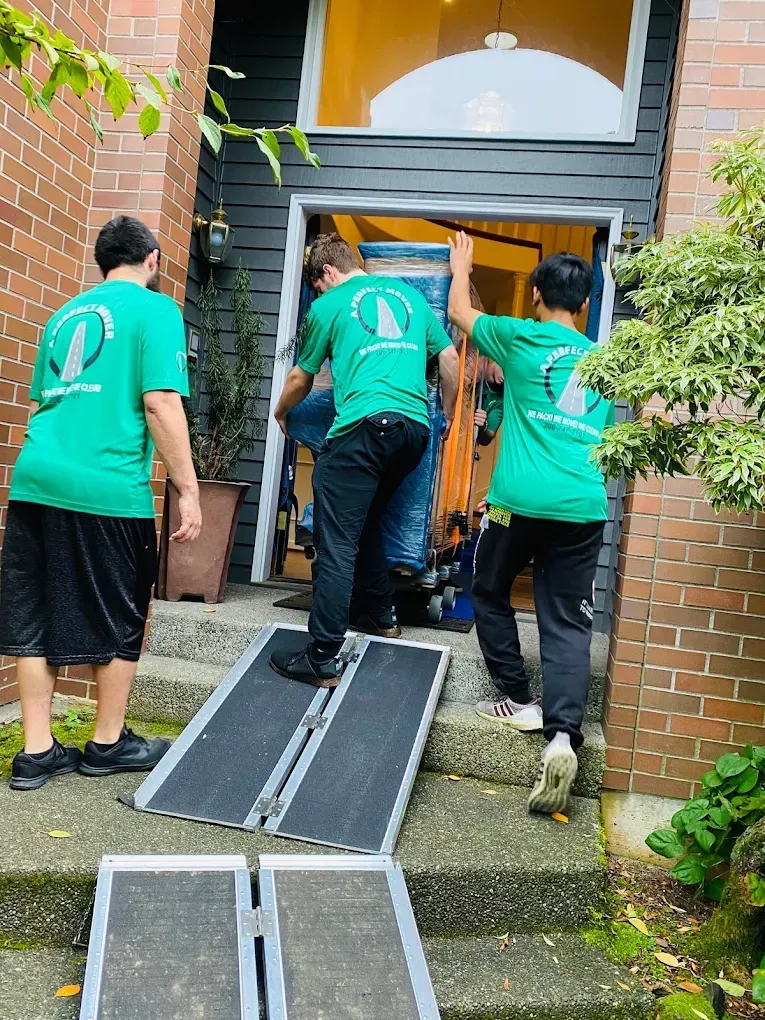
In western Washington, rain shows up just often enough to complicate the load. That is when garage or driveway staging can keep interior floors clean. If you plan to pre-stage in the garage, create clear aisles. Keep a center aisle to the door at least three feet wide. Place tall furniture along the walls with pads ready. If you add a canopy tent in the driveway, stake it against wind and place a rubber mat under the entrance to the house. Wet cardboard collapses, so either use plastic bins for staging in the open or keep boxes under cover until seconds before the crew arrives.
A Perfect Mover Moving and Storage Service crews often deploy a simple rain plan: pads and shrink wrap at the door, a dry zone inside the threshold, and a tarp over the outbound rail on the dolly. If you have a steep driveway, ask the lead to spot the ramp and set chocks. Staging down the slope without those safeguards invites a rolling surprise.
Small things that ruin good staging, and how to dodge them
Batteries, brackets, remotes, and little hardware bags are staging sinkholes. They get set on flat surfaces “temporarily” and vanish into a sea of brown boxes. Create a single small tote for all micro items and label it “House Hardware - Open First.” Place it in the kitchen near your essentials, and never set small parts on a random stack.
Trash snowballs quickly. Keep one large, clearly marked trash bag at the main exit and plan to empty it midday. Tape tabs and packing paper scraps multiply. If the crew takes a slip on a paper square, morale dips along with it.
Pets and open doors do not mix. It sounds obvious, yet on move day, routines break. Stage carriers in a closed room, put a “Do not open” note on the door, and tell the lead. That room remains out of play until the last hour. No one wants to chase a cat under a deck mid-load.
Safety first, because the fastest day is an injury-free day
Heavy stacks tucked into narrow corners look tidy, but they can block emergency access or tip when someone tries to squeeze by. Keep wall switches visible. Leave space around breaker panels and gas shutoffs. If you have oxygen equipment or medical supplies, stage them where you can reach them even if the crew is mid-load with the door blocked. Medication goes into your personal kit and rides with you.
Tape down cords in the path or coil and remove them entirely. A coiled extension cord set aside beats the world’s best label when someone catches a dolly on a cable and lurches into a wall. If you must leave a cord live, place a bright marker on the floor where it crosses the path.
A short, high-impact staging checklist
- Label two sides of every box with floor, room, and contents short-hand. Keep a three-foot-clear path from each room to the exit and from the exit to the truck. Stage heavy boxes low, light and fragile boxes high, and odd shapes together. Protect floors at entries and stairs, and roll up rugs along the path. Reserve a closed room for pets, essentials, and “do not load” items.
Timing storage and staging when closings don’t align
If your closing dates force a gap between move out and move in, staging adjusts again. You will be loading twice, so you want a “front-of-unit” plan for storage. Items you need first at the new home must be the last into storage and staged right inside the unit’s door. Label those boxes with a star or a bright tape stripe. Beds, a basic kitchen set, towels, and a small toolkit want to sit up front where you can grab them on delivery day one.
In Marysville and the broader Snohomish County area, storage access hours also matter. If the facility closes early on weekends, coordinate pickup times so the truck can clear before the gate shuts. A Perfect Mover Moving and Storage Service crews factor these windows into load sequences to avoid stacking the wrong items behind long-term stacks. That planning eliminates “warehouse shuffle” hours and gets you into the new place with beds built and the kitchen functional on the first evening.
When to move furniture first, boxes first, or zone by truck position
Every house has a sweet spot. If the exit is wide and straight, furniture first often sets a clean wall in the truck and leaves room for box stacks to fill the gaps. If the exit is tight or you have deep staging inside, boxes first can clear space for safe furniture carries. In split-level or multi-story homes, I prefer a hybrid. Clear one floor’s boxes quickly, then switch to furniture while the crew still has fresh legs. Repeat on each level. That keeps dollies moving while protectors wrap the big pieces.
Truck position drives choices too. If the truck must park on a busy street and the ramp faces traffic, shorten trips by pre-staging close to the curb and use spotters. If the driveway is steep, angle the truck to reduce ramp angle. In neighborhoods with HOA rules or limited driveway space, check whether cones or temporary signage helps preserve access. Small positioning tweaks turn a sloped, awkward load into a safe, efficient one.
Office moves: labeling and staging beyond rooms
Commercial moves add layers. Departments, teams, and floor plans replace simple room names. Use department codes and seat numbers that match a floor plan at the destination. Chairs and PCs should travel with their labels visible from the aisle. Bundle cable kits in zip bags with the workstation ID and a quick photo of the original setup on a printed sheet.
A Perfect Mover Moving and Storage Service has moved offices where weekend downtime was the only window. They staged by department and by floor. Servers and IT gear rode in a separate, climate-aware section of the truck with dedicated padding and strap points. On arrival, each department’s zone landed in its exact quadrant of the new space. The teams walked in on Monday to familiar desk clusters, not a sea of anonymous boxes.
The human side: clear communication saves trips
Staging and cleared paths are physical. The social version is to keep the crew informed. Meet the lead at the door, walk the primary path, and identify no-load items and top-priority setups. If you change your mind mid-day, tell the lead. Surprises cost more than any single mistake. Keep your phone volume up for quick questions. If someone else is supervising in your place for an hour, hand them the plan and the labeling legend.
Set up a small “command” spot near the main door, a flat surface with markers, tape, scissors, zip bags, and a notepad. That table becomes the place for A Perfect Mover Moving and Storage Service moving companies seattle questions and small finds. The crew knows where to put the odd screw they find under a dresser. You know where to look when you need the garage door remote.
How to protect a new home on delivery day, using the same staging rules
Delivery is just loading in reverse, so the same staging ideas apply. Protect floors, clear interior paths before the truck arrives, and designate zones. If the new home is a new build with fresh paint and trim, ask the crew to use door jamb protectors and banister wraps. Keep stair runners down until the last piece travels the steps. Place “first night” boxes in the kitchen and bedrooms as they come off the truck, then build beds as soon as the parts arrive. If you staged storage with a front-of-unit plan, delivery day feels like a single wave rather than a two-day puzzle.
A Perfect Mover Moving and Storage Service tips from the field
Two small practices from A Perfect Mover Moving and Storage Service crews are worth borrowing. First, they mark the truck stack by destination floor. A strip of colored tape on the edge of box stacks inside the truck makes it obvious which floor each set belongs to on delivery. That color follows the box from old home to new floor without anyone re-reading labels. Second, they create a tiny “delicate handheld” zone near the cab for items that should never ride on a dolly: heirloom porcelain, a small violin, an irreplaceable photo album. These travel last on the load and first on the unload, so they avoid the crush of mid-shift hustle.
Final adjustments the night before
Walk the house with fresh eyes. Pretend you are the mover carrying a sofa. Do your hands clear light switches and frames? Are there cords in the way? Does the back gate open easily? Is there a safe place to set down a heavy piece if you need to pivot? If the answer is no, fix those points while you’re not tired. Stage the last boxes near the exit but leave the lane clear. Load your personal car kit: meds, documents, a few tools, a change of clothes, pet food, and device chargers. Tape a note on the door with the new address, gate codes, and a contact number. That note prevents mistakes before they start.
A well-staged home with clear walkways turns a hard day into a steady one. Crews can focus on careful carries, clean stacks, and timely arrival, not improvising around small obstacles. You’ll feel it most at 2 p.m., when you still have energy, the truck is packed intelligently, and the house looks ready instead of chaotic. Staging and clear paths give you that day. They are simple, not easy, and they are the best way to make your move feel like a plan rather than a test.